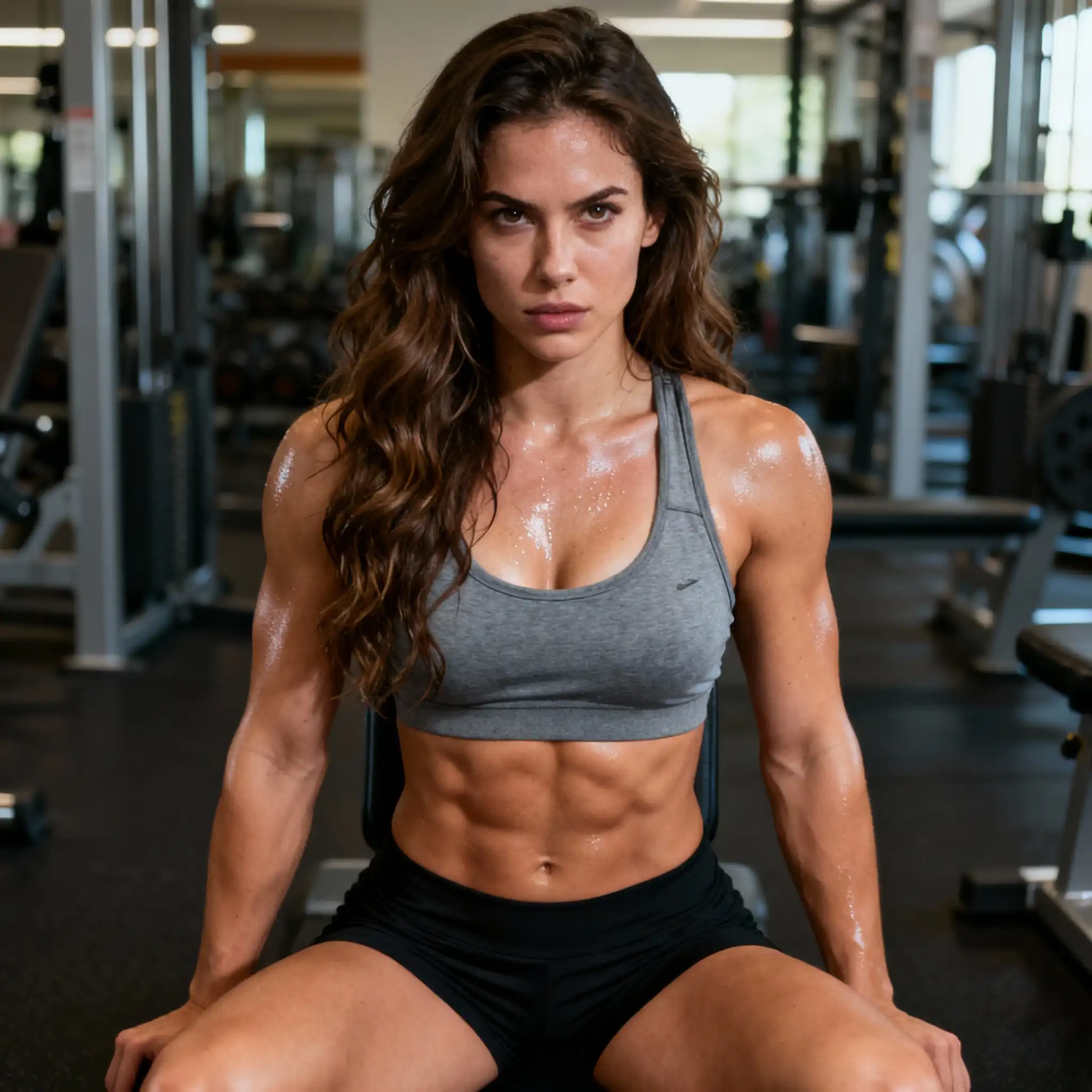
Have you ever seen a portrait so realistic you questioned whether the person actually exists? In the digital age, the phrase "this is not a real person" has become increasingly common as artificial intelligence creates synthetic faces that are virtually indistinguishable from photographs of real people. Every time you generate a random person on our platform, you're witnessing cutting-edge AI technology in action.
What Does "This is Not a Real Person" Mean?
When we say "this is not a real person," we mean the image shows a completely synthetic face generated by artificial intelligence. Unlike photographs of actual people, these portraits are created entirely by computer algorithms that have learned to mimic human facial features, expressions, and characteristics.
Each random person you see represents a unique combination of features that never existed in reality. The AI draws from patterns it learned during training to create new faces that appear convincingly human while being completely artificial.
Real Person Photos
- Captured by cameras
- Show actual individuals
- Subject to privacy laws
- Require model consent
- Limited by photography constraints
"This is Not a Real Person"
- Generated by AI algorithms
- Completely synthetic faces
- No privacy concerns
- No model releases needed
- Unlimited creative possibilities
How AI Creates Random Person Images
The technology behind generating a random person involves sophisticated neural networks called Generative Adversarial Networks (GANs). These systems work through a fascinating process of competition between two AI components.
The Generator and Discriminator
Think of AI face generation as an art forger learning to create masterpieces. The "generator" creates fake faces, while the "discriminator" tries to detect whether images are real or fake. Through millions of iterations, the generator becomes so skilled that even the discriminator can't tell the difference.
"The moment when an AI-generated face becomes indistinguishable from a real photograph represents a breakthrough in machine learning that seemed impossible just a decade ago."
Training Process
To create convincing faces where we can confidently say "this is not a real person," the AI system analyzes millions of real photographs to learn about:
- Facial proportions and symmetry
- Skin textures and lighting effects
- Hair patterns and styling
- Eye movements and expressions
- Age-related facial characteristics
- Diverse ethnic features and skin tones
Spotting AI vs. Real Photos
While modern AI can create incredibly realistic portraits, there are still subtle ways to identify when "this is not a real person." Understanding these differences helps build digital literacy in our AI-powered world.
Common AI Artifacts
Even the most advanced systems occasionally produce telltale signs that reveal a random person image is AI-generated:
- Asymmetrical earrings or accessories
- Inconsistent lighting across the face
- Unusual eye reflections or pupils
- Blurred or inconsistent hair textures
- Background anomalies or distortions
- Teeth that appear too perfect or unnatural
The Uncanny Valley Effect
Sometimes, even when we can't pinpoint specific issues, AI-generated faces trigger our subconscious awareness that something isn't quite right. This phenomenon, known as the "uncanny valley," represents our brain's ability to detect subtle inconsistencies in human-like features.
Uses of Synthetic Portraits
The ability to generate unlimited variations where "this is not a real person" has opened up numerous practical applications across various industries.
Stock Photography Revolution
Traditional stock photography faces limitations in diversity, cost, and model releases. AI-generated portraits offer unlimited variety without legal complications. Every random person can be customized for specific demographics, expressions, or styling needs.
Privacy-Conscious Design
When designing user interfaces, marketing materials, or educational content, using synthetic faces ensures no real person's image is used without consent. This approach protects privacy while maintaining visual appeal.
Creative and Artistic Projects
Artists and designers use AI-generated faces for:
- Character design for games and stories
- Conceptual art and digital illustrations
- Fashion and beauty industry mockups
- Academic research and studies
- Testing facial recognition systems
💻 Technology Behind Random Person Generation
Modern AI face generation uses StyleGAN architecture, which creates photorealistic human portraits by learning from massive datasets. Each time you see a message saying "this is not a real person," you're witnessing the result of millions of computational hours and advanced machine learning techniques.
Generation Speed
Create unique faces in milliseconds
Quality Control
Automated filtering ensures high-quality results
Ethics and Privacy
The ability to create convincing portraits where "this is not a real person" raises important ethical questions about identity, authenticity, and potential misuse.
Positive Applications
When used responsibly, synthetic portraits offer significant benefits:
- Protecting individual privacy in design work
- Enabling diverse representation without exploitation
- Reducing costs for creative projects
- Eliminating model release requirements
- Supporting research and education
Responsible Disclosure
Transparency is crucial when using AI-generated content. Always clearly indicate when "this is not a real person" to maintain trust and prevent deception. This ethical approach ensures technology serves positive purposes.
The Future of AI Faces
As AI technology continues advancing, the quality and capabilities of random person generation will only improve, bringing both exciting possibilities and new challenges.
Emerging Capabilities
Future developments in AI face generation will likely include:
- Real-time generation during video calls
- Emotion and expression control
- Age progression and regression
- Style transfer between different art forms
- Integration with virtual and augmented reality
Detection Technology
As generation technology improves, so do methods for detecting when "this is not a real person." This arms race between creation and detection ensures ongoing development in both fields.
Experience AI-Generated Portraits
See for yourself how realistic AI-generated faces can be. Every random person you'll encounter is completely synthetic—a testament to the incredible advances in artificial intelligence technology.
Generate Random Person →Frequently Asked Questions
How can I tell if "this is not a real person"?
Look for subtle inconsistencies like asymmetrical accessories, unusual eye reflections, or imperfect hair textures. However, modern AI is becoming increasingly difficult to detect.
Can I use random person images commercially?
Yes, since these are AI-generated and not real people, there are no model release requirements. However, always check the specific license terms of the platform you're using.
How realistic can AI-generated faces become?
Current technology can create faces that are virtually indistinguishable from real photographs. Quality continues to improve as AI models become more sophisticated.
Are there ethical concerns with synthetic faces?
While the technology itself is neutral, transparency about AI-generated content is crucial. Always disclose when images show synthetic people to maintain trust and prevent deception.
About This Article
This comprehensive guide explains the technology behind AI-generated portraits and why every image carries the message "this is not a real person."